Structured Cabling Outlasts Everything Plugged Into It
Every device in your building will be replaced eventually. The cabling behind the walls is what has to last through all of them.
September 3, 2026 · 3 min read
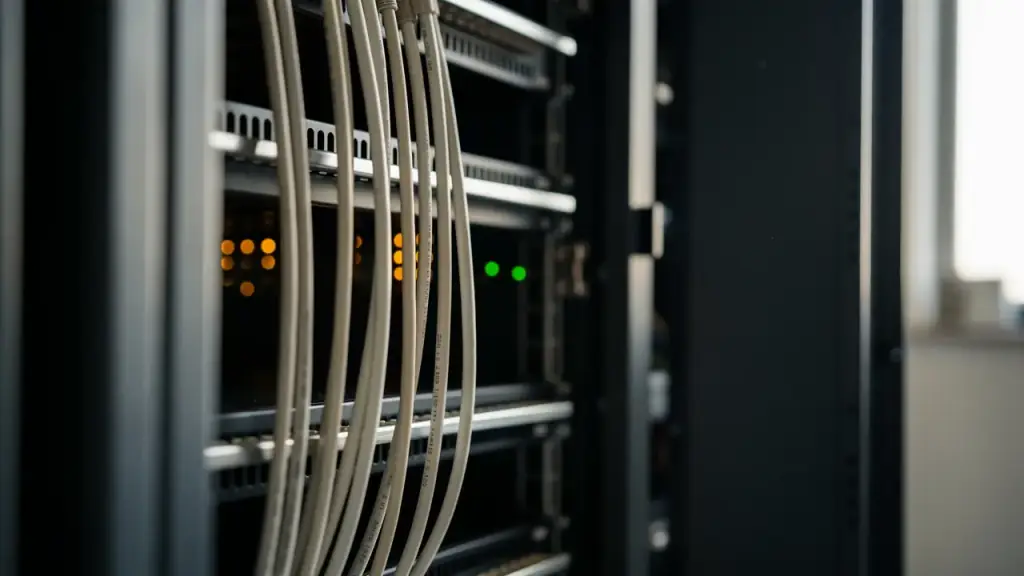
Nobody gets excited about cable. It's behind the walls, above the ceiling tiles, inside conduit, and as long as things work, it's invisible. That invisibility is exactly why it's so often the part of a building that gets done cheaply, and why so many buildings end up with a tangle of unlabeled cable runs that nobody fully understands ten years after they were installed.
Why the cable plant matters more than any one device
You'll replace your Wi-Fi router in five years. You'll replace your phone system when VOIP technology moves on. Your cameras will get swapped for higher-resolution models at some point. But the cable running from each wall jack back to your network closet, the actual physical infrastructure, is meant to stay in the walls for fifteen to twenty-five years, through several generations of the equipment plugged into it.
That's the whole case for doing it properly the first time. A cheap, mis-rated, poorly terminated cable run doesn't just fail today; it becomes the ceiling on everything you try to plug into that jack for the next two decades, and it's expensive to fix because fixing it means opening walls again.
What "done properly" actually means
- The right cable rating for the run and the environment (including riser-rated or plenum-rated cable where code requires it in shared vertical spaces or air-handling ceilings)
- Cable that meets the category standard needed for the speeds you'll actually use, with headroom for what you'll need in five years, not just today
- Proper termination at both ends, tested and certified, not just plugged in and assumed to work
- Labeled patch panels and a real wiring diagram, so anyone who works on the system later, including a different contractor, can understand it
- Separation from electrical runs where it matters, to avoid interference
That last point about labeling gets skipped constantly, and it's one of the cheapest things to get right. An unlabeled patch panel with forty ports and no diagram means every future service call starts with someone tracing cable by trial and error, which costs you time and money on every visit for the life of the building.
Riser-rated cable, explained simply
If a cable run passes vertically between floors, through a shaft, stairwell, or other space shared by multiple floors, code generally requires cable rated for that environment: riser-rated, or plenum-rated if it's running through air-handling space. This isn't a nice-to-have. It's a fire-safety requirement, because standard cable jacketing can produce toxic smoke and help fire spread between floors if it's used somewhere it shouldn't be. A contractor who understands your building's actual construction, not just a generic checklist, is the one who catches where this applies before it becomes a problem during an inspection or, worse, an actual fire.
Sizing for PoE, not just for data
Because so many devices now run on Power over Ethernet, cabling and switch capacity aren't just a question of how fast data moves anymore; they're also a power budget. Every camera, access point and phone pulling power over the cable adds up, and a switch that wasn't sized with that in mind can run out of power to deliver long before it runs out of ports. This is another place where planning for what you'll add later, not just what's plugged in on day one, saves a much more expensive fix down the road.
One cable plant, many systems
The reason cabling deserves this much attention is that it's shared infrastructure. The same structured cabling that carries your office network also carries your phones, your cameras, your access control, and your wireless access points, usually over PoE. A cable plant that was designed with only computers in mind, undersized, under-planned, no spare capacity, becomes the bottleneck the moment you want to add cameras or door readers later, and retrofitting cable into finished walls costs far more than running extra drops the first time.
It's the least visible part of any project like this, and the part that's hardest to fix once the walls are closed. Getting it right the first time isn't about spending more. It's about spending on the one part of the system that everything else in the building will depend on for the next twenty years.
Low Risers LLC, (703) 855-9235
Call (703) 855-9235More articles
What "Low Voltage" Actually Means for Your Building
Low voltage isn't one system. It's every wire in your building that isn't carrying line power, and it's usually smarter to have one team responsible for all of it.
Choosing a Camera System for a Small Commercial Building
More cameras isn't a better system. Here's what actually determines whether a camera system does its job when you need it to.